
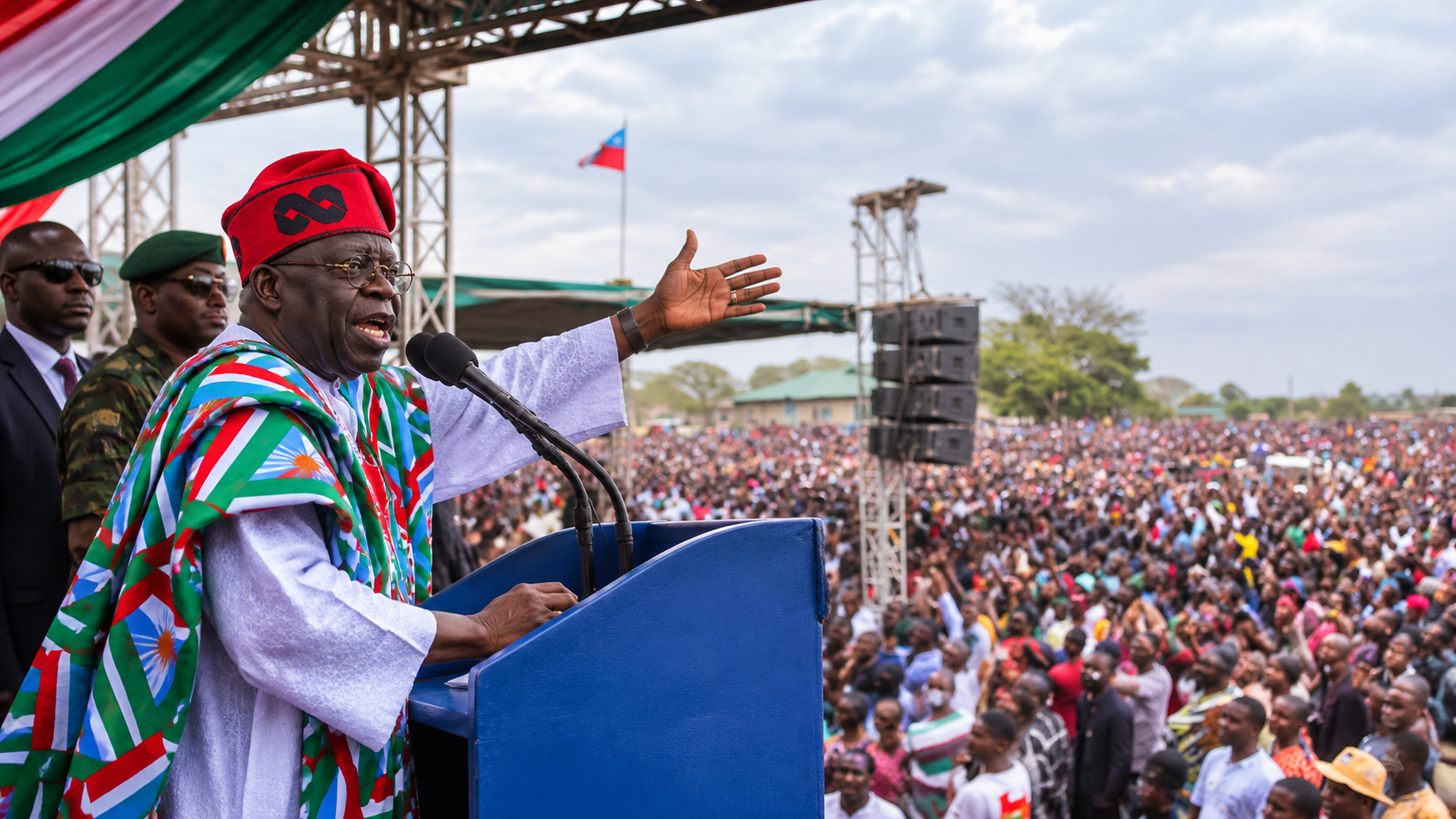
Hmmm, African Election Campaigns, every election season has its familiar scenery.
The campaign buses appear. Party colours take over streets and junctions. Politicians visit traditional rulers, religious leaders, market associations and community groups. There are speeches, handshakes, endorsements, promises and, occasionally, a distribution of gifts that leaves voters wondering whether they have attended a political meeting or a festive giveaway.
African election campaigns can be colourful, emotional, expensive and intensely competitive.
But behind the rallies and carefully staged photographs is a serious political exercise: persuading citizens that one candidate or party deserves their votes.
I find it useful to look beyond the noise because politicians do not rely on one strategy alone. Across different African countries, they combine policy promises, personal relationships, public projects, party networks, identity, charisma and, in some cases, material inducements.
The methods vary by country, electoral system, political history and local circumstances. Africa is not one constituency, and its voters do not all respond to the same campaign language.
Still, there are recurring patterns worth understanding.
The Campaign Promise: Development In Exchange For Trust
One of the most familiar ways politicians woo voters is by promising development.
A candidate may promise a new road, hospital, university, airport, seaport, electricity project, irrigation scheme or industrial park. Another may focus on jobs, lower living costs, agricultural support or improved public services.
These are often called programmatic appeals: attempts to win support through policies and proposed public benefits.
They are not inherently improper. In fact, presenting a plan for public development is a normal part of democratic competition.
The important question is whether the promise is credible.
Does the candidate explain how the project will be funded? Is there a realistic implementation timetable? Does the relevant government have the authority to deliver it? Has the proposal been costed? Is it part of a wider development plan?
A project announcement can become a powerful campaign moment, particularly when a community has waited years for it.
Take the Ibom Deep Sea Port in Akwa Ibom, for example. President Bola Tinubu announced approval of the project during his November 2026 visit to the state, after Governor Umo Eno pledged two million votes for the President in the 2027 election if the Federal Government supported the port.
The announcement connects a long-standing development aspiration with an explicit electoral appeal.
The public interest, however, goes beyond the political exchange. Residents need to know whether financing, procurement, construction and eventual operation will follow.
A campaign promise is a statement of intention. A completed project is evidence of delivery.
The Campaign Rally: Making Political Support Visible
Few things communicate political strength quite like a large rally.
The crowds, music, party flags, speeches and procession of political leaders create an atmosphere of momentum. Candidates use rallies to introduce their messages, energise supporters and demonstrate that they have an organised political structure.
Rallies also provide images that can travel far beyond the venue.
A packed stadium can become a television headline, a social media clip and a campaign poster. The crowd becomes part of the political message.
However, crowd size is not a reliable measure of electoral support.
Some people attend because they support the candidate. Others may be there because of party membership, community organisation, curiosity, entertainment or the opportunity to meet public figures.
Attendance does not automatically translate into a vote.
Research on campaign strategies in Ghana and other African settings identifies rallies, household canvassing and the distribution of gifts as recurring mobilisation methods. Their use can vary depending on whether a constituency is considered a stronghold, opposition territory or competitive area.
The lesson is simple: the rally is one part of the campaign, not the election result.
Visiting Communities And Building Local Relationships
National television appearances are useful, but politicians also need local networks.
This is where door-to-door canvassing, town hall meetings, market visits, community consultations and meetings with local leaders become important.
A candidate may visit a fishing community to discuss access to markets, meet farmers to discuss fertiliser and agricultural support, or sit with traders to hear concerns about transport costs and electricity.
These visits allow politicians to make their messages more specific.
They also provide voters with opportunities to ask questions and assess how candidates respond when the conversation moves beyond prepared speeches.
In many African political systems, local party organisers, ward leaders, community figures and political brokers play important roles in connecting candidates with voters.
These relationships can help campaigns understand local priorities and mobilise supporters.
They can also create unhealthy political dependencies when access to public resources or government assistance becomes tied to personal loyalty.
That is why local engagement should be judged by whether it creates meaningful dialogue and accountability, rather than simply producing photographs of politicians surrounded by residents.
Traditional And Religious Endorsements
In several African countries, traditional institutions and religious organisations have significant community influence.
Politicians often visit monarchs, chiefs, community elders and religious leaders during campaigns. These visits can be framed as gestures of respect, consultation or requests for support.
An endorsement from a respected community figure may influence how some voters interpret a candidate's character, background or relationship with the community.
But such endorsements do not automatically represent the preferences of everyone in the community.
A traditional ruler cannot cast every subject's vote. A religious leader cannot determine the private political choice of every worshipper.
The most useful question is whether these institutions are helping citizens assess candidates or simply lending their authority to political messaging.
Their influence should never replace the individual voter's right to make an independent decision.
Gifts, Patronage And The Problem Of Vote Buying
Now we arrive at one of the more controversial parts of election campaigns.
In some electoral environments, politicians and party representatives distribute money, food, clothing, transport support or other gifts during campaign periods.
Not every gift is automatically proof of vote buying. Community donations, lawful campaign merchandise and general charitable activity may have different purposes and legal implications.
However, when money or valuable consideration is offered to induce someone to vote for a particular candidate, the issue moves into the territory of electoral bribery.
Political scientists often use the term clientelism to describe political relationships built around the exchange of targeted benefits, favours or access for political support.
The distinction is important.
A politician promising a public hospital for a district is making a policy appeal. A politician offering an individual money specifically in exchange for a vote is engaging in a different kind of transaction.
Nigeria's Electoral Act 2022 addresses bribery in Section 121. It criminalises corrupt gifts, promises or payments intended to induce electoral support, and also makes it an offence for a voter to receive money or valuable consideration in exchange for voting or agreeing to vote in a particular way.
The law matters because a secret ballot is supposed to protect a voter's freedom.
A candidate may attempt to persuade someone, but the final choice belongs to the voter.
Identity, Regional Loyalty And The Politics Of Belonging
Campaigns also appeal to identity.
Candidates may emphasise their ethnic background, religion, region, language, community history or personal connection to a particular group.
Sometimes this is a legitimate way of communicating shared experiences and representing communities whose interests have been overlooked.
At other times, identity becomes a tool for creating fear, resentment or the impression that a vote for another candidate is a betrayal of one's group.
This can be particularly powerful where communities have experienced historical exclusion, conflict or unequal access to public resources.
Politicians may promise recognition, compensation, inclusion or a stronger voice in government.
The danger comes when political competition becomes a contest over who belongs and who does not.
Citizens should be able to ask what a candidate will do for the entire country or state, not only for the group they claim to represent.
Social Media Has Changed The Campaign Ground
The modern African campaign is no longer confined to stadiums, town halls and roadside posters.
Candidates now use social media, messaging platforms, livestreams, short videos, podcasts and digital advertising to reach voters.
A campaign speech can be cut into several short clips. A policy announcement can be turned into an infographic. A candidate can respond to criticism within minutes.
Digital platforms also allow supporters to organise, challenge official claims and share campaign material without relying entirely on traditional media.
But the same speed creates risks.
Old videos can be presented as new. Edited clips can distort statements. False endorsements can circulate. Fabricated statistics and misleading images can influence public discussion.
I would advise readers to check the original speech, policy document or official announcement before sharing a political claim.
A viral post is not automatically a verified fact, even when it carries a party logo and an impressive number of reposts.
Why Politicians Promise Projects To States And Communities
A politician seeking national office needs support from different regions and communities.
This means campaigns often include promises that speak directly to local development priorities.
One state may want a port. Another may want a railway connection. A farming region may prioritise irrigation, storage and agricultural processing. A city may demand better transport, housing and electricity.
Candidates can use these demands to demonstrate that they understand local concerns and have plans to address them.
Incumbents have an additional advantage: they can point to projects already underway or completed during their administration.
Opposition candidates may instead promise to correct what they describe as the failures of the government in power.
Both approaches require scrutiny.
An incumbent should not receive automatic credit for a project that was started by an earlier administration. An opposition candidate should not be allowed to present an ambitious promise without explaining its financial and administrative feasibility.
The most useful campaign question is not simply, "What will you give us?"
It is, "How will you deliver it, how much will it cost, who will benefit and how will we measure progress?"
How Voters Can Look Beyond The Campaign Spectacle
Campaigns are designed to persuade. Voters need a way to evaluate the persuasion.
I would encourage citizens to look at five things.
First, examine the candidate's record. What have they delivered in previous public roles? What promises were fulfilled, delayed or abandoned?
Second, examine the proposed policies. Are they specific, realistic and properly funded, or are they collections of attractive words?
Third, ask who benefits. Does the proposal improve public services for a broad population, or does it mainly reward a narrow network of political supporters?
Fourth, look for accountability. Does the candidate explain how progress will be reported and how citizens can assess performance?
Finally, protect the independence of the ballot. A gift, endorsement, rally or public promise should not remove a citizen's freedom to vote according to their judgement.
The Campaign Ends, But The Public Still Has Questions
African election campaigns can be energetic and creative. They can also expose weaknesses in political accountability when the performance becomes more important than the policy.
A rally can bring thousands of people together. A promise can give a community renewed hope. A public project can change the economic future of a region.
But voters should not have to wait until the next election to find out whether the promises were serious.
The relationship between politicians and citizens should continue after the campaign buses leave.
That is why I believe the most important part of any election is not the size of the rally, the number of gifts distributed or the number of promises announced.
It is the record that citizens can examine when the politician is already in office.
A politician may spend months wooing voters. The public should have the next several years to evaluate the work.
- Are you interested in learning how to write professionally and earn money as a writer and content creator? Contact Tolani Talks Writing Desk today to start your writing journey immediately.
- Need a professional website in 72 hours? Contact Tolani Talks Web Studio.
- Do you need a professional writer in 72 hours? Contact Tolani Talks Writers.
- If you have an article, opinion piece, event or news story you would like published, Tolani Talks would love to hear from you. Get in touch.
- Advertise With Us