
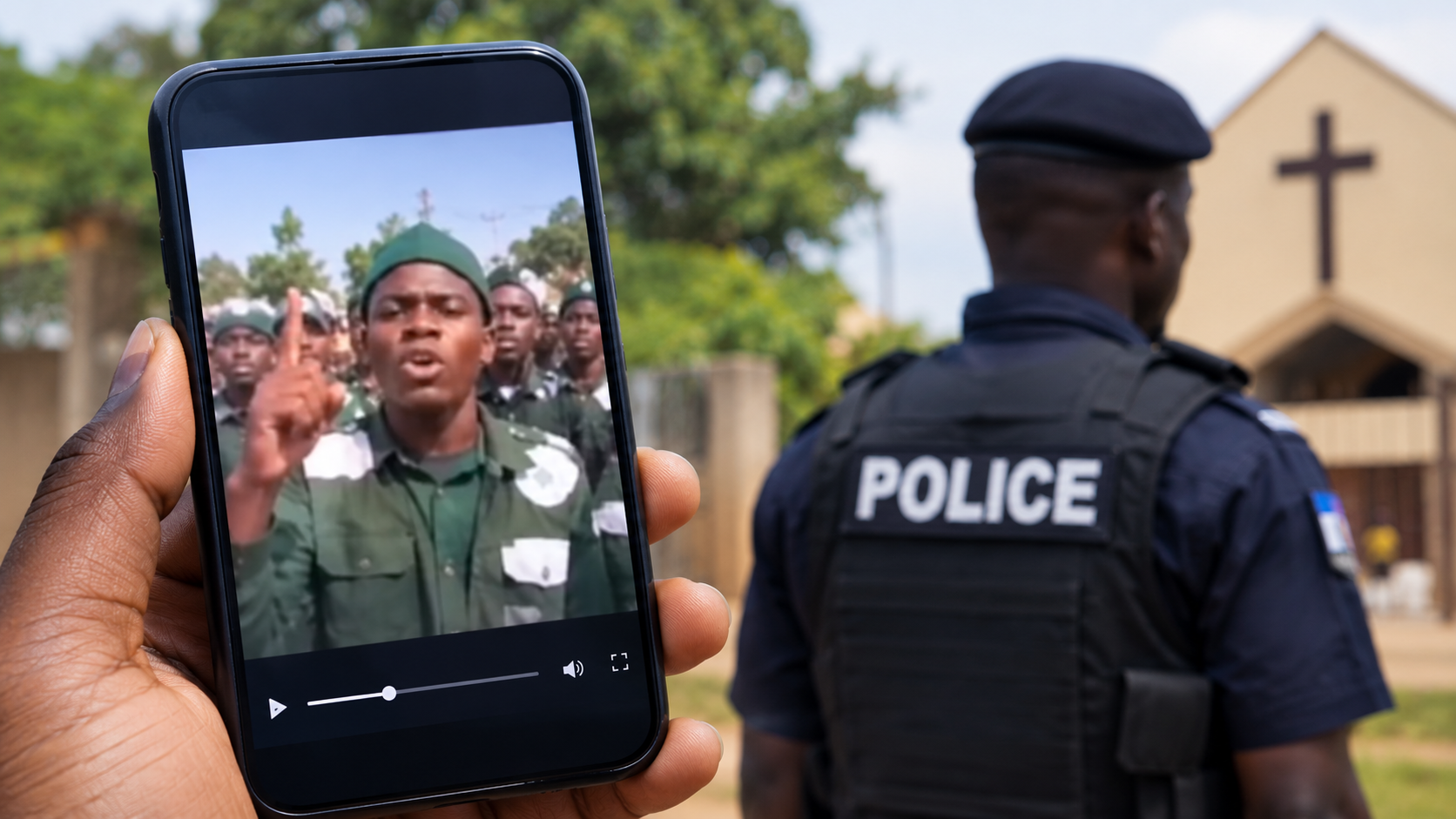
The video spread widely on social media around October 26, 2026. It drew strong reactions from religious leaders and rights groups, who called on security agencies to find out who was involved and whether the threats were real.
The case has since taken a new turn.
Reports say the Zamfara State Police Command arrested a 22-year-old man, identified as Umar Ibrahim Gandi Maradun, over the video. Police say they are investigating the matter.
The incident has raised serious questions about religious hatred, the safety of worshippers and the need to protect children and young people from messages that encourage violence.
What Does the Viral Video Show?
The video shows a young man leading a group of boys in a marching exercise.
The people in the footage appear to be wearing uniforms linked to a volunteer first-aid group associated with Jama’atu Izalatil Bid’ah Wa Iqamatis Sunnah, widely known as JIBWIS.
A translation shared with the video suggests that the leader calls for an AK-47 rifle and speaks about travelling to Enugu to attack Christians during Sunday worship. The chants also refer to Jos and further killings.
These claims have caused serious concern because they appear to target people because of their faith.
However, the full meaning and setting of the recording must be checked by investigators.
The identities of everyone shown, the reason for the exercise and the circumstances surrounding the chants should not be treated as fully established until the evidence is examined.
A video can raise a serious security concern, but it is important to confirm its context before drawing conclusions about every person who appears in it.
Police Arrest Suspect in Zamfara
The Zamfara State Police Command has reportedly arrested Umar Ibrahim Gandi Maradun, 22, in connection with the video.
According to reports, JIBWIS leaders first apprehended him before handing him over to the police. The police said they were working to establish the facts surrounding the recording.
The footage reportedly shows the suspect with pupils from two Islamic schools in Maradun Local Government Area of Zamfara State.
Police said early findings suggested that the video was recorded on Friday, October 23, 2026.
The police also said the suspect was wearing a uniform associated with the JIBWIS group. Investigators are expected to establish who took part in the recording, what was said and whether anyone encouraged or planned violence.
An arrest does not mean that a person has been found guilty.
The suspect's responsibility must be decided through a lawful process based on evidence.
JIBWIS Rejects the Alleged Threats
JIBWIS has publicly distanced itself from the words heard in the video.
The organisation's national chairman, Abdullahi Bala-Lau, condemned the alleged calls for violence. He said the remarks did not reflect the group's teachings, aims or values.
The group also called for an investigation into the recording.
The response matters because the uniforms seen in the video led many social media users to connect the people involved with the organisation.
However, wearing a uniform does not by itself prove that every person in a video acted with the group's approval.
Investigators must establish whether the people involved were acting under official instructions, on their own or in another setting. JIBWIS's denial should be considered, but it does not replace an independent investigation.
Christian Leaders Demand Urgent Action
The Christian Association of Nigeria (CAN) has called on security agencies to investigate the video.
CAN President Archbishop Daniel Okoh said the threats were alarming and should not be dismissed as harmless words or youthful behaviour.
The association urged the Department of State Services, the Nigeria Police Force and other security agencies to establish when and where the video was recorded.
It also called for the identification of those involved and anyone who may have organised, funded or encouraged the activity.
CAN further asked authorities to assess possible risks to Christian communities and places of worship in Enugu, Jos and other areas.
The association said people should be free to worship without fear of being attacked because of their religion.
Its concern also extends to the young people seen in the footage. If children are being taught to praise or encourage violence, that raises questions about their safety, guidance and the messages they receive from adults.
Amnesty International Also Calls for an Investigation
Amnesty International has joined calls for an investigation, according to reports by The Punch.
The rights group and religious leaders have urged the authorities to establish the facts and ensure that anyone found responsible faces the law.
A fair investigation should examine the original recording, identify the people shown and check the translation of the chants.
It should also establish the recording's location, date and purpose.
These steps are important because the claims are serious. They involve alleged threats against people gathered to worship and could increase fear between religious communities.
The aim should be to find the truth and prevent violence, not to blame people who have not been shown to be responsible.
Fact-Check Raises Questions About the Video's Origin
A fact-check by PRNigeria found no clear sign that the video had been created using artificial intelligence.
The team examined the footage and used digital tools to look for signs of AI generation.
However, the fact-check did not establish that the people shown were members of JIBWIS's volunteer group. It also could not independently confirm the original location or date of the recording.
This is an important difference.
Finding no clear sign of AI generation does not prove every claim made about a video.
The recording may be genuine footage, while questions about who appears in it, where it was filmed and what the words mean may still need answers.
That is why investigators should work with the original video and other evidence instead of relying only on captions and translations shared online.
Why the Video Has Caused Such Concern
Nigeria has many religious communities, and peaceful worship is an important part of daily life for millions of people.
Words that appear to call for attacks on people because of their faith can create fear, especially when they mention real towns and places of worship. They can also increase mistrust between communities if the claims are shared without care.
The video has also raised concerns about young people.
Children may copy the words and actions of adults without fully understanding the harm they can cause.
Parents, teachers, religious leaders and community groups all have a role in teaching young people that people must not be attacked because of their religion.
At the same time, the public should avoid using one recording to accuse an entire religious group. Responsibility must be based on evidence about the people who made, supported or shared the threats.
What Happens Next?
The police investigation will be central to what happens next.
Authorities need to establish the facts, check the recording and determine whether any offence was committed.
They also need to assess whether the footage points to a real threat to Christian worshippers or whether important parts of its meaning and context have been misunderstood.
If investigators find evidence of criminal conduct, any action should follow the law and respect the rights of the people involved.
Members of the public can help by avoiding the spread of unverified claims, reporting credible threats to the proper authorities and refusing to encourage revenge or religious hatred.
Truth and Justice Must Come Before Religious Tension
The viral video has raised a serious concern that deserves a careful and urgent response. The reported arrest, the calls for investigation and JIBWIS's public rejection of the alleged threats are important developments, but they do not answer every question about the recording.
The authorities must establish who was involved, what was said and whether anyone planned or encouraged violence.
Anyone found responsible should face the law, while people who are not responsible should not be targeted because of their religion or association.
Protecting people of every faith must come first. Nigeria needs a response based on evidence, justice and peace, not rumours, collective blame or retaliation.