
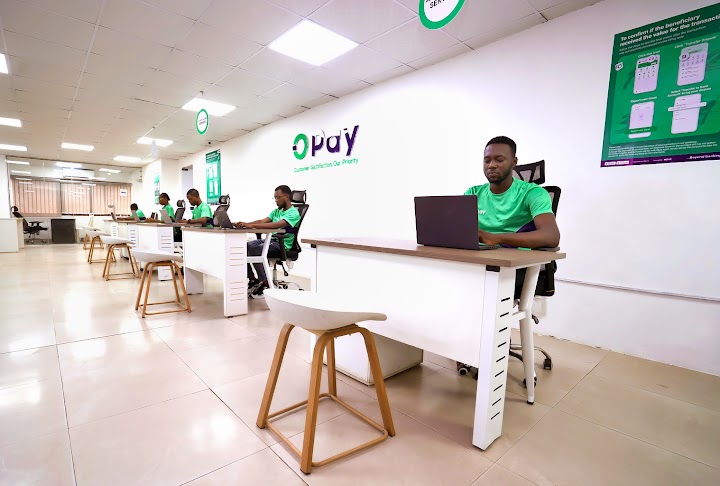
OPay Nigeria: How A Mobile Payment Platform Became A Household Name
I think there are very few things that demonstrate how much technology has changed everyday Nigerian life quite like the way we now move money.
Not too long ago, transferring money, paying bills and withdrawing cash could involve a considerable amount of physical movement. Today, a smartphone and a functioning financial application can handle several of those activities without anyone leaving the house.
One of the companies that has become part of this transformation is OPay Nigeria.
Whether people are transferring money, paying electricity bills, purchasing airtime or making payments through a merchant's POS terminal, the OPay name has become increasingly familiar.
But what exactly is OPay? Who owns the platform, how did it enter the Nigerian market and what makes its business model significant?
I think understanding the company is particularly useful now that it has also become one of the financial service providers participating in the Federal Government's latest ₦50,000 NERSI relief intervention.
The Beginning Of OPay
OPay is a financial technology company established in 2018, with a focus on providing digital financial services in emerging markets.
The company's stated mission is to make financial services more inclusive through technology, particularly in markets where access to traditional financial infrastructure can be limited.
Its Nigerian operations began in 2018, when the company launched its digital payment services following the acquisition of a local financial services provider.
The business subsequently developed its mobile wallet and nationwide agent network.
I find this background important because OPay did not build its Nigerian presence around a single product.
Its strategy involved connecting consumers, merchants and financial service providers through a digital payment ecosystem.
That approach allowed the company to participate in several everyday financial activities rather than depending exclusively on bank transfers.
What Does OPay Actually Do?
OPay operates a digital financial services platform that provides several products for individuals and businesses.
Its consumer services include:
Money transfers
A digital wallet
Airtime purchases
Data subscriptions
Electricity and other bill payments
Savings services
Other supported lifestyle payments
For merchants, OPay provides payment acceptance solutions that allow businesses to receive digital payments and manage transactions.
The company also operates within the wider financial technology and credit services market.
I think the important distinction here is that OPay is not simply an application for sending money.
It is a platform attempting to bring multiple financial activities together in one digital environment.
The OPay POS Network
One of the most visible parts of OPay's Nigerian operations is its merchant and agent network.
Walk into many Nigerian neighbourhoods and you are likely to encounter a POS operator offering cash withdrawals, transfers and other payment services.
These operators have become an important part of the country's financial access infrastructure.
For customers who cannot easily reach a bank branch, a nearby agent can provide a practical alternative for certain financial transactions.
For small businesses, POS services also make it easier to receive electronic payments without investing in complicated payment infrastructure.
OPay's business services are designed to serve merchants ranging from smaller businesses to larger enterprises.
I think this is one reason the company has become so visible in everyday Nigerian commerce. Its services are not restricted to people who spend their days shopping online or working with technology.
They are also relevant to market traders, small business owners, shopkeepers and ordinary consumers.
OPay And Financial Inclusion
Financial inclusion is one of the central ideas behind OPay's business model.
In simple terms, financial inclusion means making useful financial services accessible to people and businesses that may otherwise struggle to access traditional banking facilities.
Nigeria has a large population of individuals and small businesses who depend on convenient payment channels for their everyday activities.
Mobile financial services can reduce the distance between these users and the financial system.
OPay says its technology is designed to support convenient digital transactions and improve access for underserved populations.
However, I would distinguish between making financial services available and ensuring that every Nigerian can use them effectively.
Internet access, digital literacy, transaction reliability, customer support and affordability still matter.
A financial application can only be truly inclusive when people can use it safely and confidently.
How OPay Makes Money
This is where the business story becomes particularly interesting.
A financial technology company does not necessarily make money simply because millions of people download its application.
It needs sustainable revenue streams.
OPay operates across consumer, merchant and credit services.
Its business model includes payment and merchant services, financial products and other digital services.
The merchant side of the business allows it to provide payment solutions to businesses, while its consumer platform supports everyday financial transactions.
Its credit services also form part of its wider financial ecosystem.
The company's commercial opportunity lies in creating a platform that people and businesses use repeatedly.
The more useful the platform becomes, the greater its opportunity to develop additional services and relationships with merchants.
That is the broader commercial logic behind a fintech ecosystem.
Is OPay A Bank?
This is a question I think deserves clarification because digital financial platforms can sometimes be confused with conventional commercial banks.
OPay is a financial technology company operating through regulated financial service structures in Nigeria.
Its Nigerian operations include a Central Bank of Nigeria regulated mobile money business.
Its regulatory status and the specific legal entity providing a particular service matter when determining what protections and obligations apply.
The company also states that its Nigerian financial services are insured by the Nigeria Deposit Insurance Corporation, subject to applicable coverage and conditions.
I would encourage customers to understand the specific financial product they are using rather than assume that every service within a financial application has identical regulatory treatment.
The company has an established place in Nigeria's regulated financial services environment, but that does not mean every product should automatically be treated as a conventional bank account.
OPay And The Federal Government's ₦50,000 Grant
OPay has recently attracted another wave of public attention following its selection as one of the financial service providers participating in the Federal Government's National Emergency Relief and Stabilisation Intervention.
The intervention is designed to provide ₦50,000 to selected vulnerable households.
Other participating providers include ALAT by Wema Bank, MoMo PSB, NairaGram and Moniepoint.
For OPay, the arrangement places its digital wallet within an important public sector payment initiative.
The company has clarified that it does not determine who qualifies for the government support.
Eligible customers are expected to receive a notification through the application and follow the official instructions.
I think this development illustrates something important about the evolution of fintech companies.
Their platforms are no longer used only for private transfers and retail payments. They are increasingly becoming part of the infrastructure through which financial services and public interventions can reach individuals.
However, government beneficiary selection remains separate from OPay's commercial operations.
The company is a payment provider, not the authority responsible for deciding who receives public assistance.
OPay's Place In Nigeria's Fintech Future
Nigeria's financial technology industry is becoming increasingly competitive.
Digital payment providers, commercial banks, payment service banks and other fintech businesses are competing to make financial transactions more accessible and convenient.
For OPay, maintaining its position will depend on more than acquiring customers.
Transaction reliability, security, customer service, regulatory compliance and innovation will continue to matter.
I also think consumer trust will remain one of the most important factors in the company's future.
People are trusting financial applications with money that may represent their rent, business capital, school fees or household savings.
That is a responsibility no fintech company should take lightly.
OPay's growth is part of a much wider transformation in how Nigerians interact with money.
The real test for the company will be whether it can continue to deliver convenient, secure and dependable financial services while adapting to changing consumer expectations.
And as Nigeria's digital economy expands, that is a story worth following beyond the latest trending notification.
- Are you interested in learning how to write professionally and earn money as a writer and content creator? Contact Tolani Talks Writing Desk today to start your writing journey immediately.
- Need a professional website in 72 hours? Contact Tolani Talks Web Studio.
- Do you need a professional writer in 72 hours? Contact Tolani Talks Writers.
- If you have an article, opinion piece, event or news story you would like published, Tolani Talks would love to hear from you. Get in touch.
- Advertise With Us