
Tinubu Approves Ibom Deep Sea Port, But When Will Construction Begin?
There are infrastructure announcements, and then there are infrastructure announcements made in front of an election rally with two million votes hovering somewhere in the conversation.
President Bola Tinubu has announced approval of the proposed Ibom Deep Sea Port in Akwa Ibom State, reviving hopes for a project that has occupied the state's development conversation for decades.
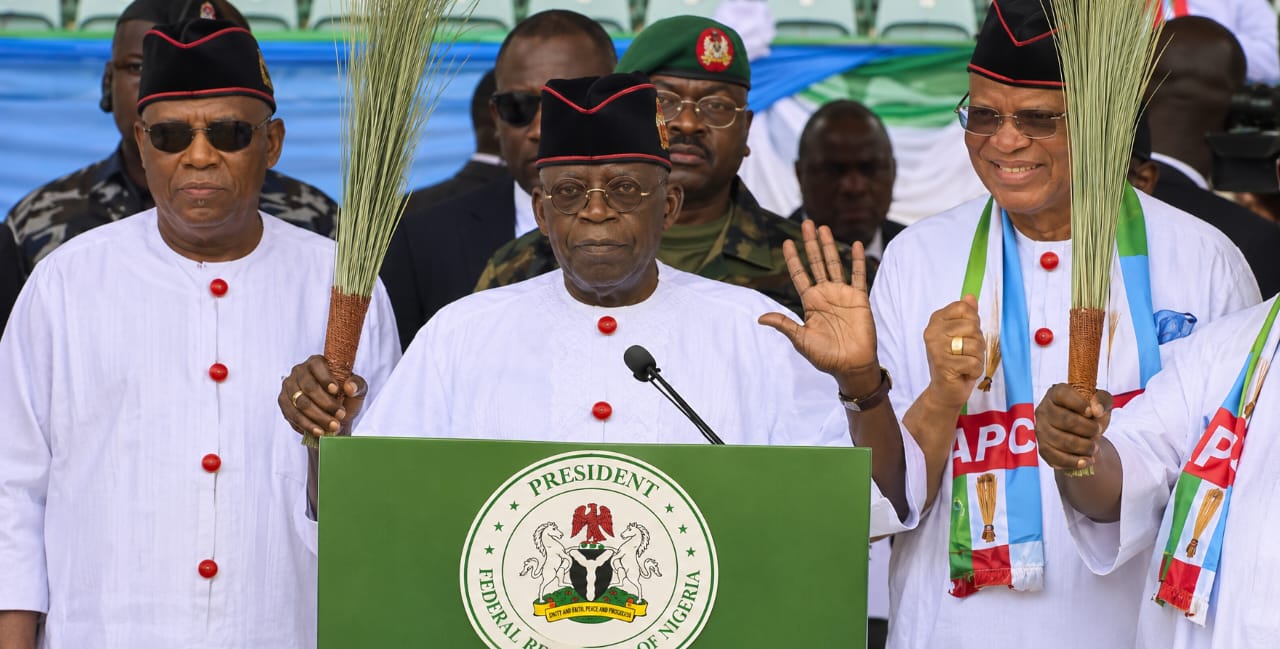
The announcement was made on Friday, 6 November 2026, during a rally and reception in the President's honour at the Godswill Akpabio International Stadium in Uyo. It followed a public request from Governor Umo Eno, who had promised that Akwa Ibom would deliver two million votes for Tinubu's re-election in 2027 if the Federal Government approved and facilitated the project.
The President responded by declaring the port approved.
It was a politically significant moment, but I would not confuse the announcement with the arrival of a functioning seaport. There is still a considerable distance between presidential approval at a rally and the first commercial vessel entering a completed port.
And that distance is where the real questions begin.
The Two Million Vote Promise Behind The Announcement
Governor Umo Eno presented the Ibom Deep Sea Port as a major economic demand of Akwa Ibom people.
He told the President that the state would deliver two million votes in the 2027 election if the Federal Government supported the project. He described the port as an opportunity to unlock economic activity in Akwa Ibom, the wider South-South region and Nigeria.
Tinubu responded by acknowledging the request and announcing his approval.
The exchange attracted attention because it brought two things together on the same political stage: a major infrastructure demand and an explicit electoral commitment.
The President had also promised a deep-sea port for Akwa Ibom during his 2023 presidential campaign rally in Uyo. At the time, he referred to the Lekki Deep Sea Port as an example of the kind of development he hoped to replicate.
For Akwa Ibom, therefore, the latest announcement is connected to a promise that predates the current election cycle.
I find the political timing worth examining, but it is important to distinguish a political commitment from a legal conclusion. The public exchange does not, by itself, establish that a contract has been awarded or that votes have been exchanged for a government project.
The port is a public infrastructure proposal with potential economic consequences for the state and the country. Its implementation should be assessed on its technical, financial and public interest merits.
What Is The Ibom Deep Sea Port?
The Ibom Deep Sea Port is a proposed maritime infrastructure project intended to serve as a major trade and transhipment hub in the Gulf of Guinea.
The project's official website describes a facility designed to accommodate very large vessels, with cargo transferred from larger ships to smaller vessels for onward distribution to ports closer to their final destinations.
The proposal is linked to the wider Ibom Industrial City development, which is intended to bring maritime, industrial, logistics and other commercial activities into one economic zone.
According to the project website, the proposed port development covers approximately 5,129 hectares, while the associated industrial city is planned across a larger 14,400-hectare area.
The ambition is substantial. A functioning deep-sea port could support container handling, shipping, warehousing, logistics, manufacturing and other activities that depend on access to maritime trade.
But a port does not become an economic success simply because ships can dock there.
It needs reliable road and possibly rail connections, customs and security infrastructure, efficient cargo handling, competitive charges, adequate power, trained personnel and a sufficient volume of trade.
The supporting industrial ecosystem matters just as much as the port itself.
A Project That Has Been Waiting For Years
The Ibom Deep Sea Port is not a new idea created for the 2027 election.
Its history reaches back to earlier Akwa Ibom administrations, including the period when the proposal was known as the Ibaka Deep Seaport and Industrial City.
The project has featured in successive development plans and political conversations, with different administrations attempting to advance it.
In December 2020, reports said the Federal Executive Council had approved the implementation of the first phase, with a reported first-phase cost of approximately $2.016 billion. The wider project was reported to have an estimated construction cost of $4.6 billion at the time.
Those historical figures should not be mistaken for a current, fully confirmed project budget. Costs, financing arrangements and project specifications can change as technical studies and procurement progress.
The Infrastructure Concession Regulatory Commission also listed the Ibom Deep Sea Port among projects in Nigeria's public-private partnership pipeline.
The proposal has therefore passed through several layers of government and project development long before the latest presidential announcement.
What Stage Is The Project Actually At?
This is the part I would encourage readers to pay close attention to.
The project's own published status page reports that federal government approval had been obtained, the environmental impact assessment completed, land acquired and surveyed, and the Outline Business Case approved.
It also describes the project as being at the Full Business Case and procurement stage.
In June 2026, the Akwa Ibom State Government reported that Governor Eno and project partners had held technical discussions in Paris with Africa Global Logistics. The discussions reviewed a technical feasibility report prepared by Worley Parsons and considered investment, implementation and long-term sustainability.
These are meaningful development milestones.
However, they are not the same as completed financing, a final construction contract, commencement of construction or an operational port.
That distinction is essential when interpreting Tinubu's announcement.
The President's declaration gives the project renewed political backing. The public will still need a detailed explanation of what the latest approval covers, which agencies are responsible for the next steps, whether procurement has been concluded and when construction is expected to begin.
I would also want to see a published implementation timetable and a clear account of the financing structure.
Tinubu Also Approves International Airport Status
The deep-sea port was not the only infrastructure announcement from the President's visit.
Tinubu also announced approval for Victor Attah International Airport to attain international airport status.
The airport upgrade was presented alongside the port as part of a wider infrastructure and economic development conversation involving Akwa Ibom.
The President also spoke about education, skills development, employment and the potential of the state's oil palm resources.
These commitments could complement the port project if they translate into practical investment.
A major maritime facility needs more than a coastline. It needs a connected transport system, a skilled workforce, reliable services and businesses capable of using the opportunities created by the infrastructure.
The airport, roads and industrial city could therefore form part of a wider economic strategy. Their actual value will depend on delivery, funding and the extent to which they connect to productive economic activity.
What The Port Could Mean For Akwa Ibom
If completed and commercially successful, the Ibom Deep Sea Port could create opportunities in shipping, freight forwarding, warehousing, customs brokerage, haulage, ship services, manufacturing and export processing.
It could also attract businesses that need access to international trade routes.
For local communities, the question will be whether the project creates meaningful employment and business opportunities for residents, rather than becoming an isolated infrastructure development with limited local participation.
There will also be environmental and social considerations.
Large port developments can affect coastal ecosystems, fishing activities, land use and local livelihoods. Environmental protection, transparent compensation arrangements and meaningful community consultation should be part of the implementation process.
I would like to see the government explain how local businesses and workers will participate, what training programmes will be provided and how communities near the project site will be protected.
Economic development should not require local residents to become spectators in a project taking place in their own neighbourhood.
The Politics Of Infrastructure And The 2027 Election
The timing of the announcement makes the Ibom Deep Sea Port an important political story as well as an economic one.
Governor Eno has publicly connected the state's electoral support for Tinubu to the Federal Government's commitment to the port. Tinubu, in turn, has announced approval during a political gathering.
For politicians, major infrastructure projects offer a powerful campaign message. They can be presented as evidence of attention, influence, partnership and future economic opportunity.
For voters, the more useful question is what happens after the announcement.
Will the project move into the next procurement and construction stages? Will financing be secured? Will contracts be transparently awarded? Will the promised jobs materialise? Will the state publish measurable milestones?
These are questions that should survive beyond the excitement of a rally.
I would not judge the port by the applause it received in Uyo. I would judge it by the quality of the implementation, the money committed, the construction completed and the economic benefits eventually delivered.
The Approval Is A Beginning, Not The Finish Line
Tinubu's announcement gives the Ibom Deep Sea Port renewed political visibility and a fresh commitment from the highest office in the country.
For a project that has remained in the development conversation for years, that matters.
But approval is not construction. Construction is not completion. And completion is not the same as a commercially successful port.
Akwa Ibom deserves a project that moves beyond campaign promises and becomes a functioning economic asset.
The two million vote promise may dominate the headlines today. The more important number in the years ahead will be the number of jobs created, businesses supported, cargo handled and communities that genuinely benefit.
That is the delivery record the people of Akwa Ibom should eventually be able to examine.
- Are you interested in learning how to write professionally and earn money as a writer and content creator? Contact Tolani Talks Writing Desk today to start your writing journey immediately.
- Need a professional website in 72 hours? Contact Tolani Talks Web Studio.
- Do you need a professional writer in 72 hours? Contact Tolani Talks Writers.
- If you have an article, opinion piece, event or news story you would like published, Tolani Talks would love to hear from you. Get in touch.
- Advertise With Us